Thank you for reading. I will not be adding any more Bird of the Day Entries as of 5/2/25, but will update if this changes. All articles were written by me, but none of the videos or images shown are of my creation. At the time of writing these entries I wasn't keeping track of the credits but the youtube videos are directly linked and the photography can be sourced through reverse searching. I plan on adding image credits soon as soon as I have a bit of time.
Welcome to the Bird of the Day! This is a random collection of informational bird entries I wrote back in highschool. Thought it would be fun to share them here.
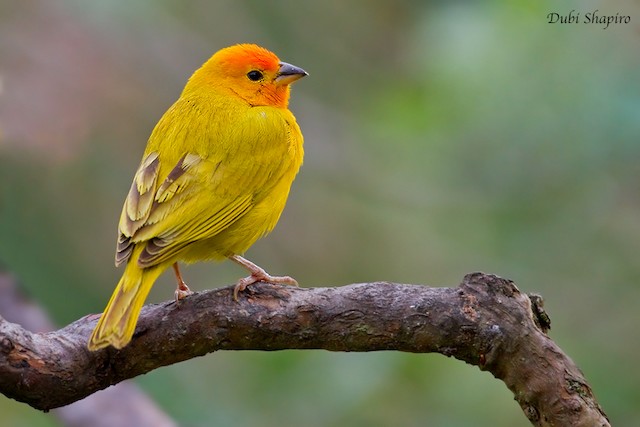
Saffron Finch 5/2/25
The Saffron Finch is a widely distributed and common South American species of tanager commonly found in semi-arid brushlands and urban areas within its native range around the Amazon Basin, as well as other areas of its introduction, such as parts of Hawaii and Panama. They are recognized by their yellow head and orange crowns, yellow-green upperparts, and their lively voices. Their diet mainly consists of seeds and insects in variability, which are often rooted around for in pairs, though they may also forage on the ground in flocks outside of the mating season and during the winter months. Saffron Finches nest in cavities, such as empty spaces between rocks, branches, bamboo chutes, and under the roofs of buildings - they are also very tolerant of humans, and are commonly seen in urban areas. Saffron Finches are also a very popular choice for bird owners, and are commonly bred in captivity.
A pair of Saffron Finches and a recording of their call!
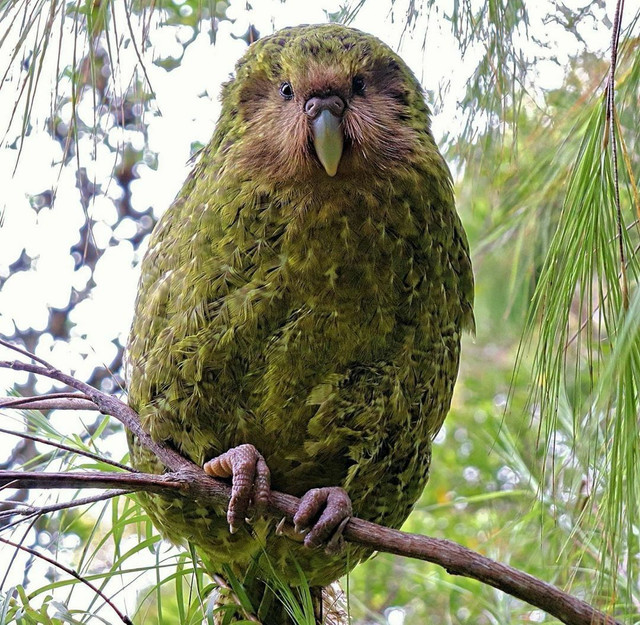
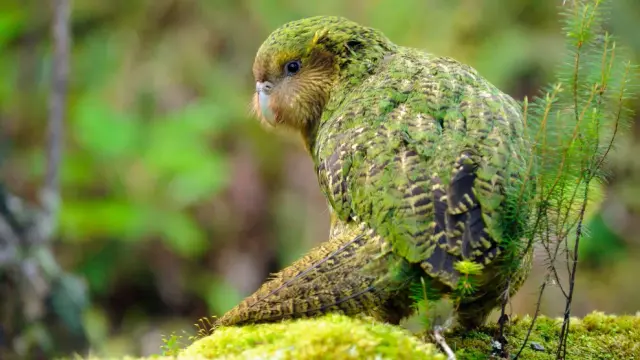
Kākāpō 1/2/25
The Kākāpō, also known as the owl parrot, is a large, nocturnal, ground dwelling parrot recognized by its unique facial disk, frontward facing eyes, short legs, stocky body and its blotched green and yellow plumage. They are the only flightless species of parrot, and the heaviest of the species as well. Kākāpōs are endemic to both islands of New Zealand, and are currently critically endangered. Approximately 244 Kākāpōs have been reported alive as of September 2024.
Being primarily nocturnal, Kākāpōs roost under the cover of the trees or on the ground during the day, and root around at night in search of food. Despite being flightless birds, they make for excellent climbers. Using their short wings, they can leap from branch to branch while using them as a sort of parachute - softening their landing and aiding them in the descent from trees. They are herbivorous, and due to their flightlessness, have a very low metabolic demand; allowing them to survive on little and/or low quality food sources. Generally they may feed on fruits, seeds, stems, and leaves while foraging.
Of course, I can't not include this iconic video.
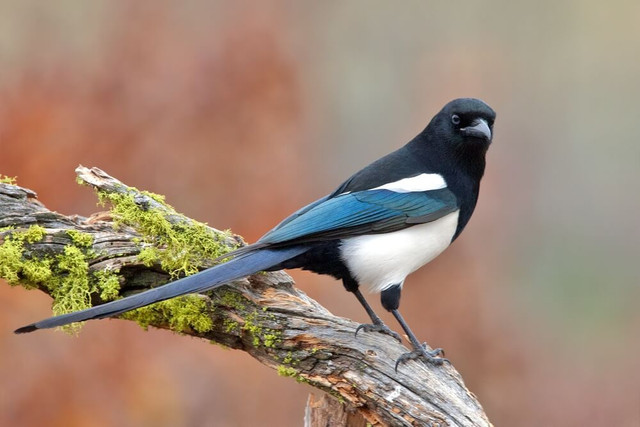
Black Billed Magpie 1/1/25
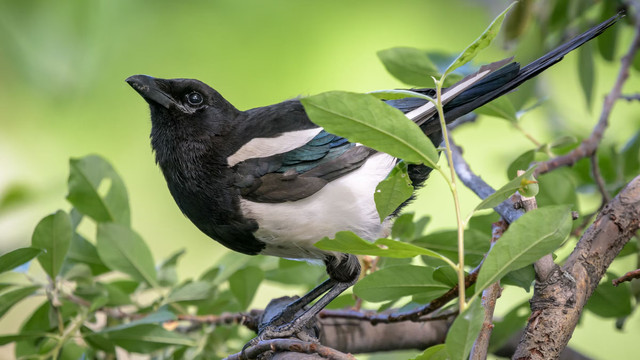
The Bird of Today, the Black Billed Magpie, also known as the American Magpie. Found in the western half of North America, the Black billed Magpie is a medium sized corvid recognized by its black and white plumage and blueish green iridescent wing and tail accents. They are commonly seen in open country near heavy brush or occasional trees suitable in supporting their large nests. They are relatively solitary, though younger and non-breeding Magpies may form small flocks. They are opportunistic scavengers; picking off of carrion, stealing eggs and chicks, digging through trash, visiting feeders and snatching scraps from people. They are highly intelligent, and a blast to watch.
A short video of a Maggie vocalizing and meandering.
White Crowned Sparrow 10/11/24
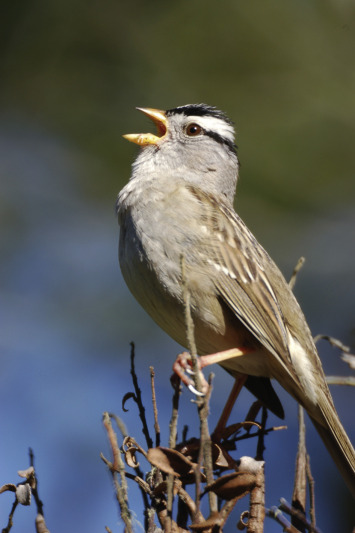
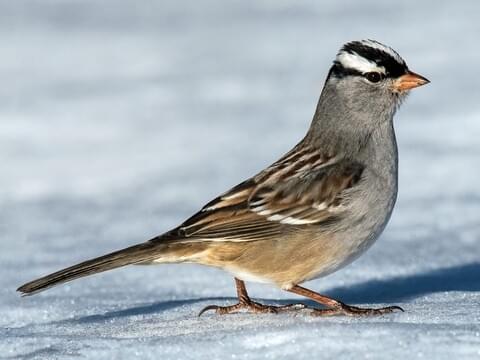
The White Crowned Sparrow is a medium sized passerine bird of the New World sparrow family, found visiting the majority of the North American continent throughout the winter months, and up North for breeding. They are also found in parts of the West year round. They are recognized by their streaked black and white foreheads or 'caps', long tails, and bright beaks.
White Crowned Sparrows generally forage on the ground and in low vegetation for seeds, insects, and plant components, but may also catch flying insects in short flight. They are also able to be coaxed to bird feeders as well, though they prefer seed left on the ground.
The White Crowned Sparrow's call is a thin, sweet whistle. Young males generally learn the basics of their song within the first two or three months of life, and do not learn from their parents. Rather, the sparrow will pick up the jist of it through the generalized song of other sparrows in its natal environment, which I found very interesting. White Crowned Sparrows that are raised in captivity or away from their natal environments will develop an abnormal or "isolate" song, which would severely impair its ability to attract mates if released.
White Crowned Sparrow Call!
White Bellbird 10/5/24
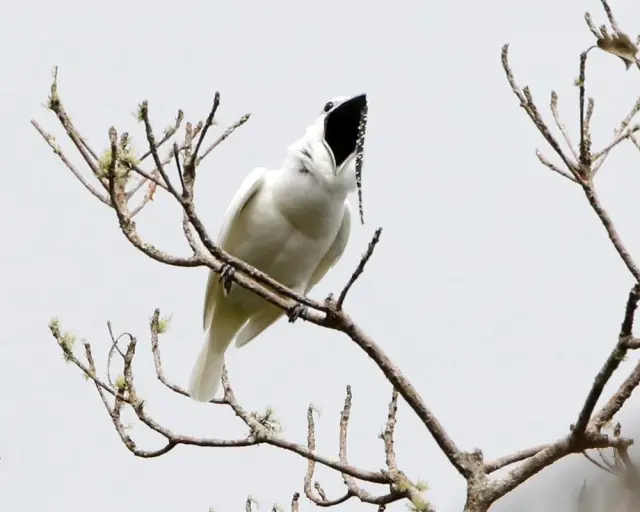
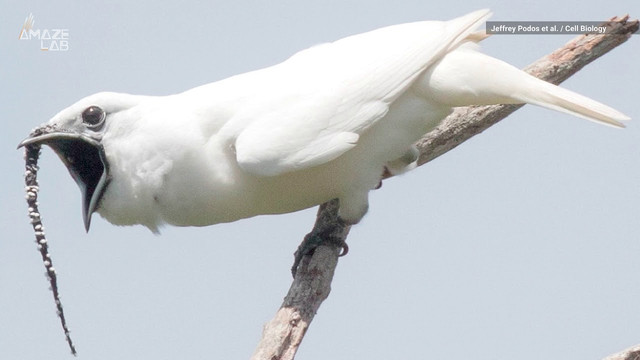
The White Bellbird is a smallish and unique looking bird of the Cotingidae family, found distributed within the moist rain forests of northeast South America, in places such as the Guianas, Venezuela, and around parts of Brazil. Males are easily distinguishable - stark white with a black bill and prominent wattle. Females however, are a somewhat wholly dark olive color, a very stark contrast to their Male counterparts. Though their looks are stunning on their own, the White Bellbird is more commonly known for their calls. They are the loudest birds in the world, creating a jarring and almost non-animal vocalization that has been recorded to reach up to 125.4 decibels, about that of a pneumatic riveter or chainsaw.
Within their tropical environments, the White Bellbird's diet mainly consists of fruit produced by the plants and trees which are often swallowed whole. Though the White Bellbird's population has decreased minutely due to deforestation, they are not currently labeled as vulnerable or endangered.
The world's loudest bird call!
Great Frigatebird 10/4/24
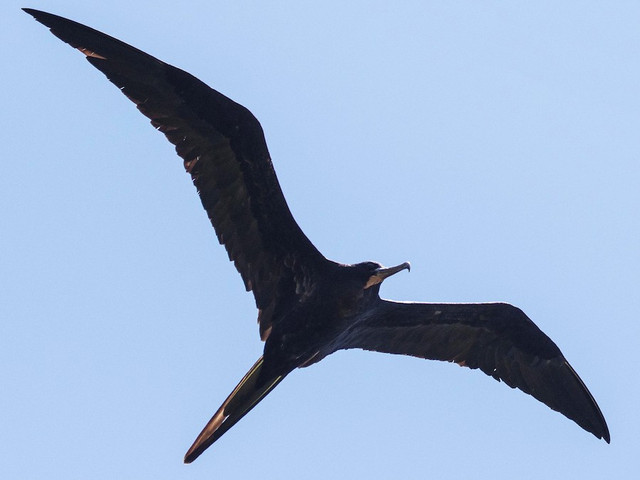
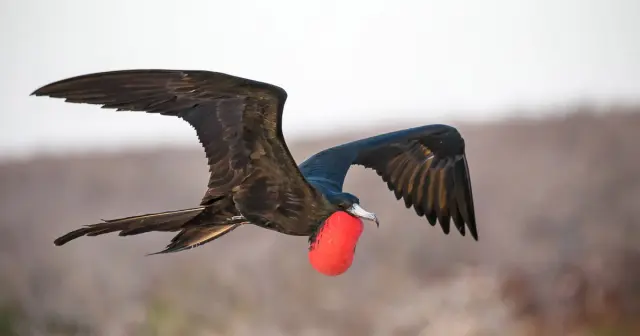
The Great Frigatebird is a large seabird majorly distributed around the Tropical Pacific Ocean, such as the Galápagos Islands and Hawaiian Islands. Smaller populations may be found in the Indian Ocean and South Atlantic. Frigatebirds are recognized by their sleek black plumage and light builds. Females are generally larger than Males, and have a white throat and chest. During mating season, Males are easily distinguished by their bright red gular sacs, which are used during courtship.
Frigatebirds forage within fifty miles of the breeding or roosting areas, diving down to take prey mid-flight from above or beneath the surface of the water. Flying Fish make up the majority of their diet, though they will also take squids and other fish species. Frigatebirds will often take advantage of Dolphin hunting tactics, snatching fish from schools pushed to the surface.
A video of the Great Frigatebird's bizarre courtship display.
Great Horned Owl 10/1/24
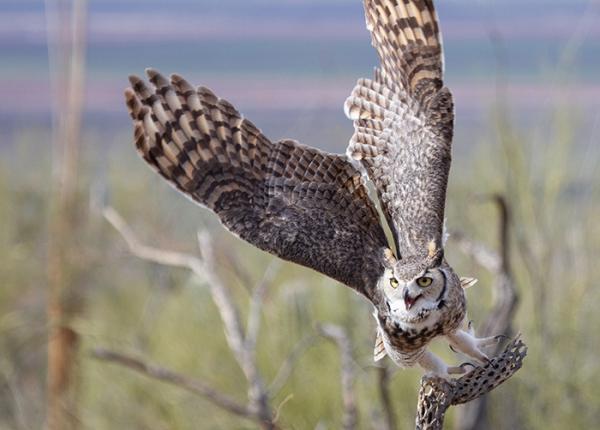
The Great Horned Owl, also referred to as the Tiger or Hoot Owl, is a large species of Owl native to the Americas. Thanks to their incredible adaptability, they are recognized as the most widely distributed true Owl of the Americas and have 15 recognized subspecies. The Great Horned Owl is recognized by its heavy build, broad wings and large head, and a distinct facial disk. Plumage within subspecies varies, though generally they are colored for camouflage. Upper parts are generally a mottled brown, and underparts are generally a lighter color with brown accents. All Subspecies are darkly barred along their sides.
The Great Horned owl is a carnivorous and predatory bird, and its diet primarily consists of small mammals such as rabbits, hares, rats, mice, voles and squirrels, though they can and will freely take larger mammals, birds, amphibians, reptiles and invertebrates.
A Great Horned Owl's eyes are just slightly smaller than that of a human, making them one of the largest of all terrestrial vertebrates. Like all other Owl species, it cannot move or roll its eyes, and instead looks around by swiveling its head at different angles. An owl has 14 neck bones, and can turn its head approximately 270 degrees.
Here is a short video of a Great Horned Owl's call.
Sandhill Crane 9/30/24
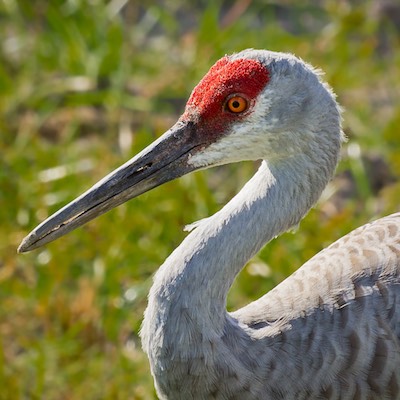
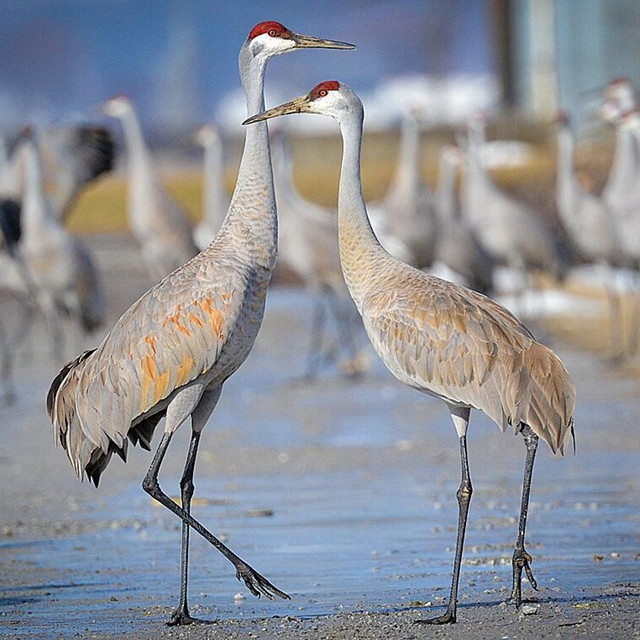
The Sandhill Crane is a large species of crane found distributed across North America and extreme Northeastern Siberia. They are easily recognized by their grey, ochre, and worn-looking plumage, and the prominent red patch on their foreheads. Sandhill Cranes are a migratory bird, forming flocks over 10,000 and flying more than 200 miles a day southeastward for the winter months.
Sandhill cranes are also social birds, generally living in pairs or small family groups. In the winter, however, large groups of up to a thousand unrelated cranes will form 'survival groups' that roost and forage together. They are mainly herbivorous, but their diet varies depending on availability. Sandhill cranes will root around for seeds, corn, wheat, berries, insects, snails, reptiles and amphibians, which are generally found within shallow vegetated wetlands or various upland areas. Consequently, they are often known to frequent bodies of water such as lakes and rivers.
Calling Sandhill Cranes
Pied Currawong 9/28/24
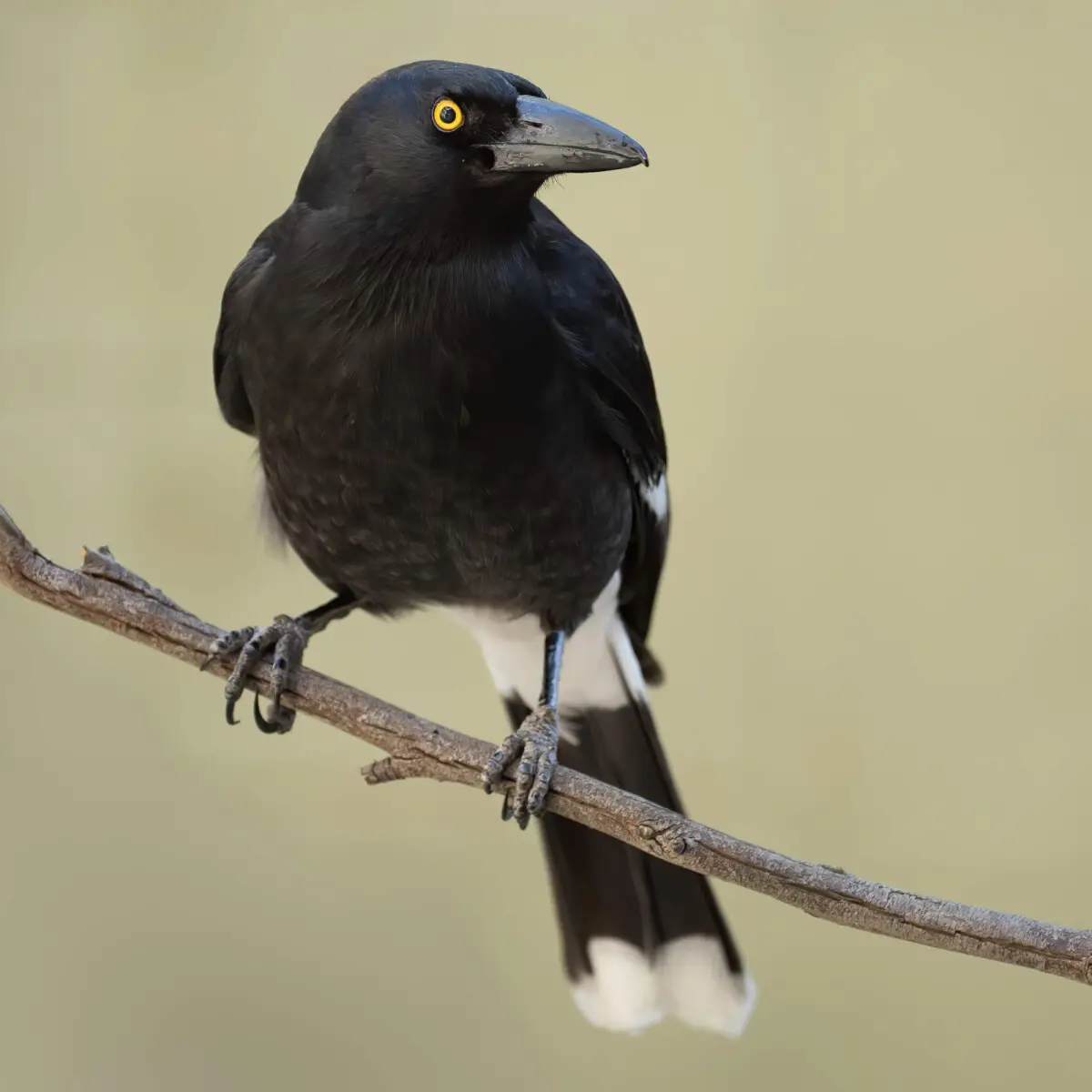
The Pied Currawong is one of three Currawong Species native to the wet and dry forests, rural areas, and semi-urban environments of Eastern Australia and Lord Howe Island. They are robust, crow-like passerine birds that are recognized by their sleek black and white plumage, yellow irises and gape, and prominent bills. Pied Currawongs dwell and hunt mostly within the trees, though they may hunt both in the air and on the ground. They are omnivorous, foraging and opportunistic feeders, consuming a wide range of food depending on the time of year. They may eat Fruit, Berries, Insects, Juvenile Birds and Eggs, Scraps, Rubbish, Mice, Carrion and even smallish adult birds.
Pied Currawongs are most commonly seen solitarily or in small groups, flocks of fifty or more birds may form within the Autumn and Winter months. Generally, they are sedentary, though higher altitude populations are known to relocate to lower areas for the winter.
Here is a Pied Currawong's Call
Jambu Fruit Dove 9/27/24
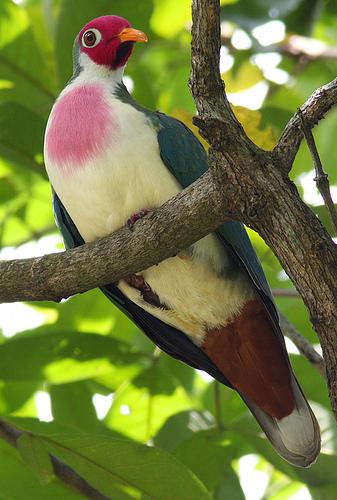
Bird of today, the Jambu Fruit Dove. Another member of the Columbidae family, commonly distributed in southern Thailand and along the Malay Peninsula, Malaysia, Brunei, and Indonesian islands such as Java, Kalimantan and Sumatra. The Temoq people of Pahang believe that the female Jambu Fruit dove is a form of their creator and ancestor Maq Sidi. It is placed in the genus Ptilinopus along with nearly 60 other Fruit Doves. They are recognized by their forest green upperparts, ivory neck and underparts, a very prominent reddish purple face and chin, and a dusted purple patch on their chests.
Jambu Fruit doves are mainly found in lowland rain forests and mangrove swamps, feeding almost exclusively on fruit produced by rain forest trees, and the occasional fallen items dropped by monkeys or other birds. Like other birds of Columbiformes, the Jambu Fruit Dove has the rare ability to drink water without the use of gravity, as they can siphon or swallow liquids.
Despite being mostly aboreal, the Jambu Fruit Dove's behaviors are typical to most other pigeons. bowing and cooing to get the attention of a mate, building flimsy nests of twigs, grasses and roots, and being a generally inconspicuous and meek bird.
Jambu Fruit Dove Feeding!
Shoebill 9/14/24
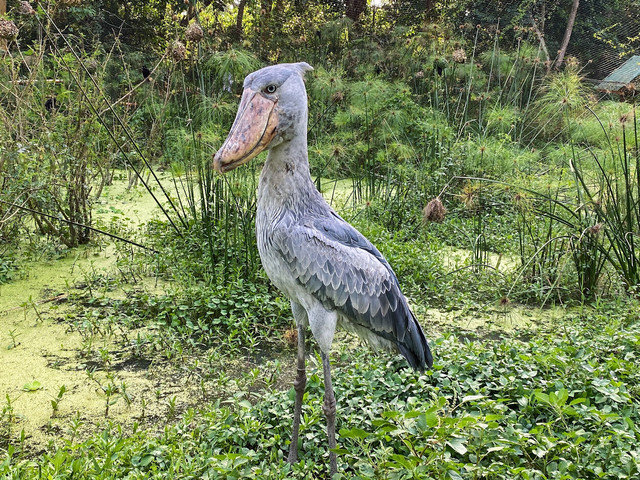
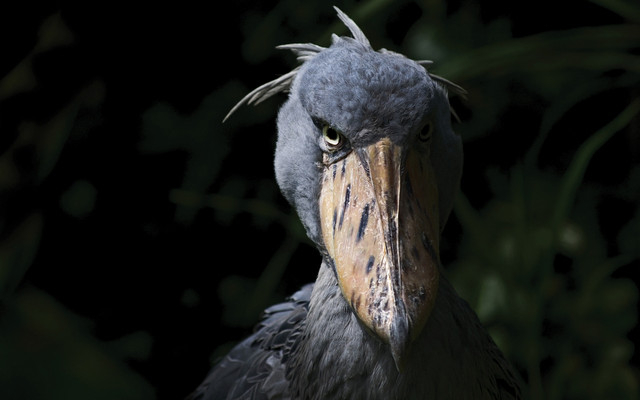
The Shoebill (Also commonly called the Shoe-billed stork), is a tall, somewhat intimidating and long legged wading bird found in tropical East Africa and in swamps ranging from South Sudan to Zambia. It has previously been classified with Ciconiiformes (storks) based on its overall form and characteristics, however genetic evidence suggests it belongs in the same family as Pelicans and Herons (Pelecaniformes). Its sharp eyes and large bill give them a somewhat prehistoric look.
The Shoebill is easily recognized by its large shoe-like bill, which serves a variety of purposes. for one, its large gape and sharp edged beak allows it to hunt large prey. Shoebills may hunt baby crocodiles, small turtles, frogs, snakes, water fowl, and various fish. It also allows for quick decapitation of its prey.
Despite their unsettling appearance, eerie calls, and glaring eyes, Shoebills are actually quite docile. They show no threatening behavior and can be approached quite easily. This makes them one of the five most desirable birds to observe in Africa by birdwatchers. There is a viable population of Shoebills in the wild, though they are currently classified as vulnerable to endangerment due mainly to habitat destruction, disturbance, and hunting.
Here are two videos of a Shoebill clattering its beak. The sound is made as a greeting and during nesting.
Goldcrest 9/13/24
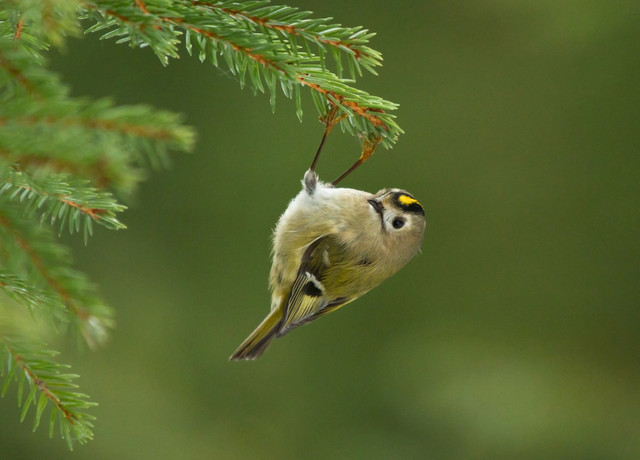
The Goldcrest is a small passerine bird of the Kinglet family, often recognized by its bright golden crest feathers adorned on its head and greenish hues accented on its wings and body. This, and its title 'King of the birds' in European folklore, gives rise to its scientific and English name.
The Goldcrest has a very large distribution in Eurasia, breeding spans from Macaronesia to Japan, and it is common to see them in the middle and northern temperate and boreal latitudes of Europe. Goldcrests are generally found in cooler areas than the very similar Firecrest, for example.
Males and Females have very similar plumage. From a glance it can be difficult to distinguish them. However, a noticeable difference can be seen in the color of their crests. Females, like the two images shown above, have a solid and bright yellow crest. In comparison, the Male has a distinct orange hue that generally fades out from the start of the crest, shown below.
Goldcrests seek a variety of prey, generally feeding within the trees and frequently foraging beneath the underside of branches and leaves (In comparison to the Firecrest, which does the opposite). Spiders, caterpillars, springtails, and flies make up the majority of their diet. In the winter, flocks of Goldcrests will cover a given distance at only a third of the speed that Firecrests will, taking the prey otherwise ignored by their relative.
Victoria Crowned Pigeon 9/7/24
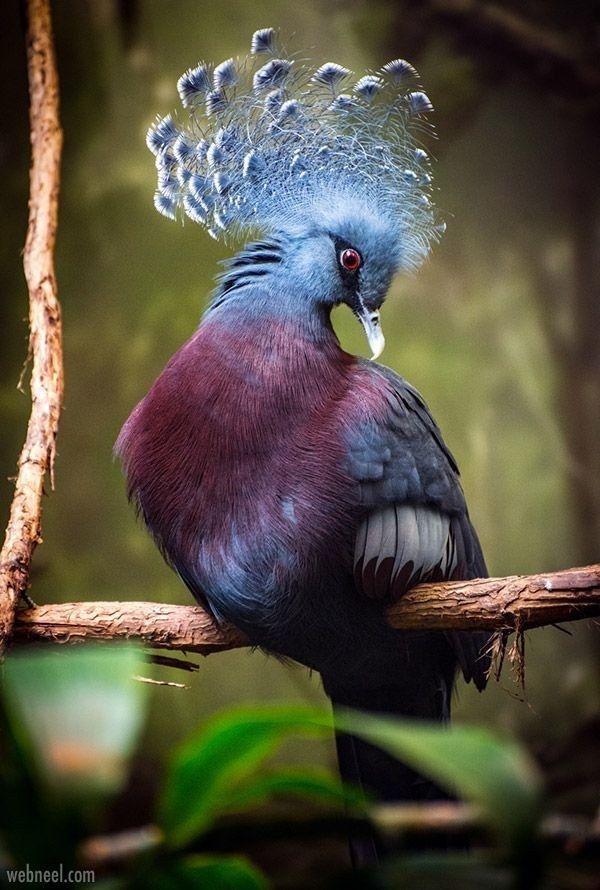
The Victoria Crowned Pigeon, also named Goura Victoria, is a large and exotic species of pigeon found within the lowland and swamp forests of New Guinea and its surrounding islands. On average, the Victoria Crowned Pigeon can weigh up to 5.3 pounds, making it the largest surviving species of Pigeon in the world. They are recognized by their blueish grey bodies, elegant lace like crests, maroon chests and notably red irises. Though they are quite unique looking, they are still somewhat reminiscent of the common rock pigeon.
Victoria Crowned Pigeons often travel in small parties of two or more in search of food along the forest floor. Their diet mostly consists of fallen fruit, though they may also eat the occasional seed or invertebrate. Similar to a Peacock, they are relatively passive and slow moving. Though if disturbed, they will fly horizontally and take refuge within the canopy.
Out of the three wild crowned pigeon species, the Victorian Crowned Pigeon is classified as the most rare occurring. It is the most widely kept within captivity, and is evaluated as near threatened due largely to logging and hunting within their natural habitats.
Here are two videos of the Victorian Crowned Pigeon's calls.
And this a video of a display. I could not find a better video than this so I apologize in advance. 😂
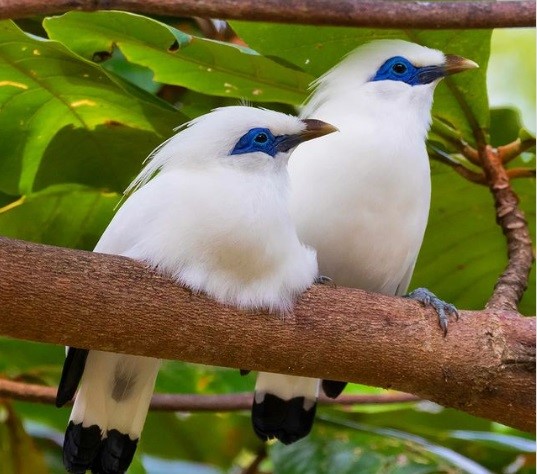
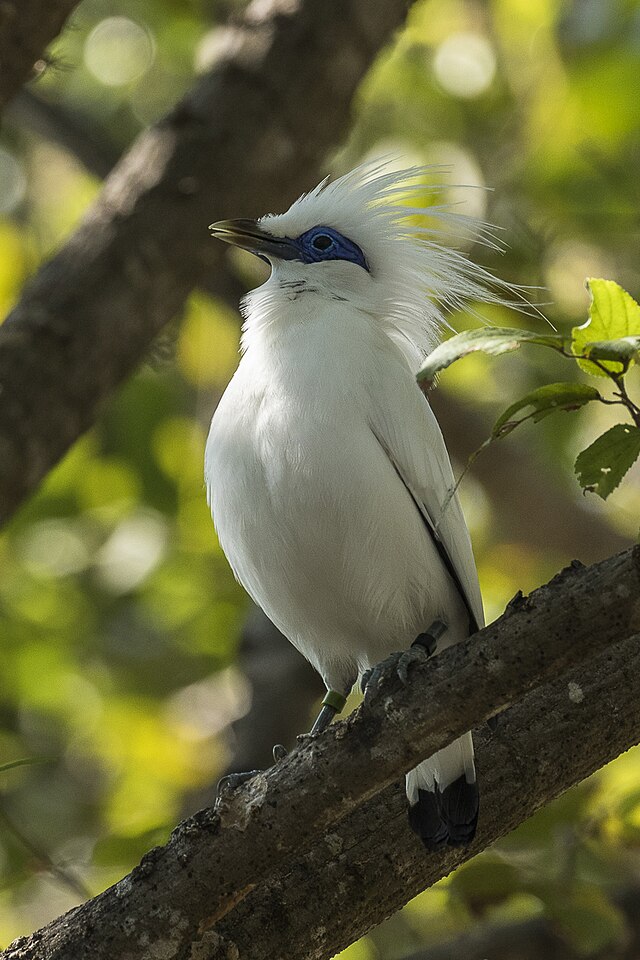
Bali Myna 9/5/24
The Bali Myna is a beautiful and critically endangered species of Myna, and are exclusively restricted to northwest Bali and its islands. In 2020, it was recorded that fewer than 50 adults were left living in the wild. This is largely due to illegal wildlife trade and poaching of the area.
The Bali Myna typically resides within the cover of the canopy, likely due to their high visibility to predators. Their bodies are almost wholly white, save for their black tipped wings and tail, and the vibrant blue skin around their eyes. They will leave the canopy in search for food along the forest floor and understory, and the majority of their diet consists of seeds, fruit, insects and worms.
It is estimated that around 1,000 have been recorded to be surviving in captivity.
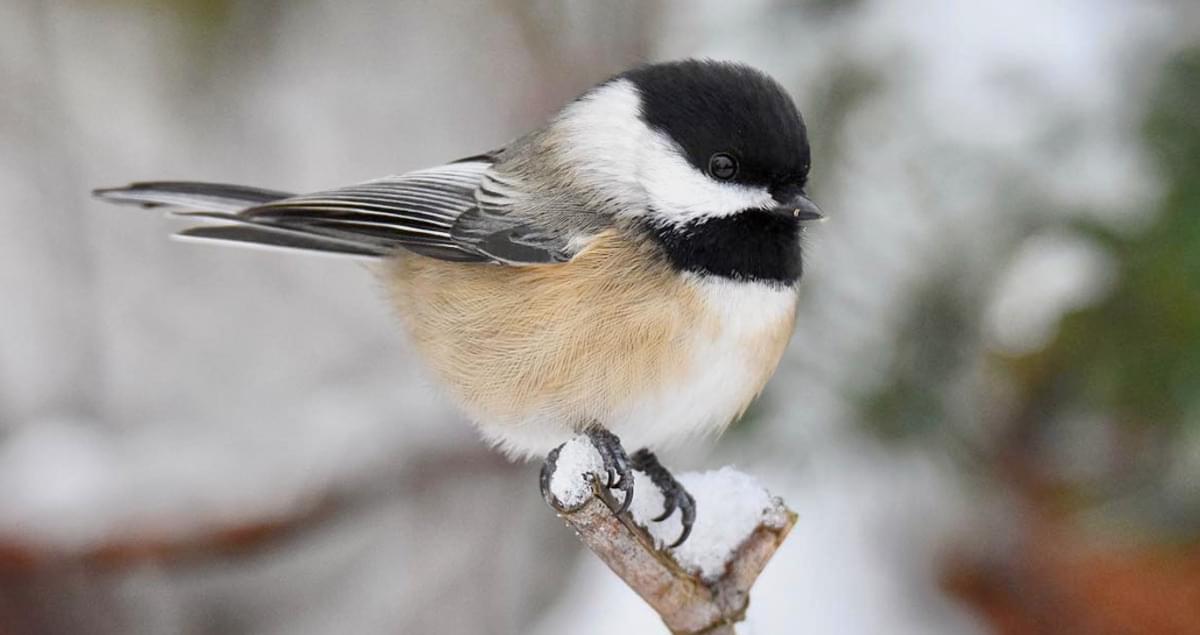
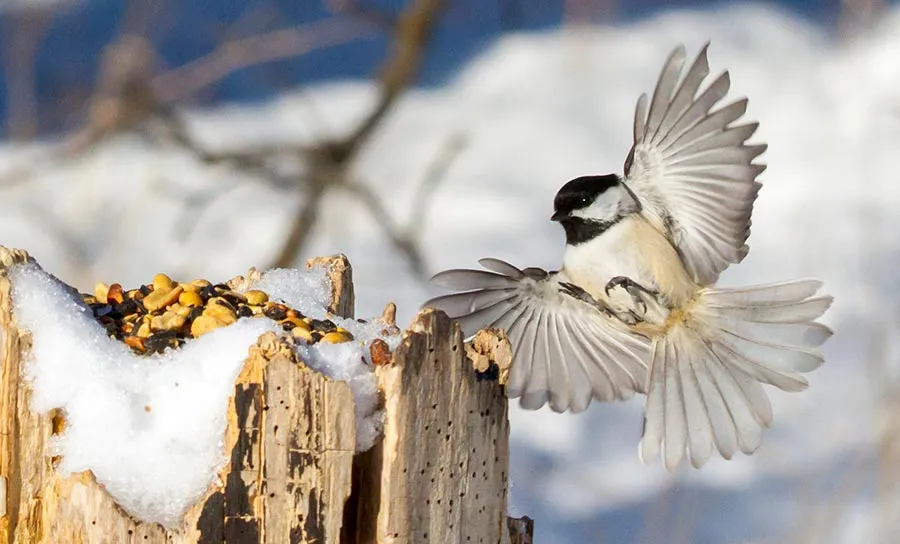
Black-Capped Chickadee 9/4/24
Bird of Today, the Black-Capped Chickadee. One of my favorites.
Black-Capped Chickadees are nonmigratory passerines found widely distributed across North America; the better upper half of the United States, and throughout Alaska and Canada.
They are recognized by a jet black cap and bib, round bodies, and their distinguishable Chicka-dee-dee-dee sounding calls. They are commonly spotted in a wide range of both deciduous and coniferous forests, woodlands, thickets, parks, and suburban areas. Black-Capped Chickadees do not vary their habitat between either breeding or non-breeding seasons, though dispersal may occur during the winter.
During the summertime, insects (like caterpillars) form the majority of the Black-Capped Chickadee's diet. In the winter, however, seeds and berries become a bit more important. Chickadees will also feed from bird feeders, and have been known to scavenge fat off of dead animals to get through the winter months.
Here is a video of a Chickadee call. Does it sound familliar?
Bee Hummingbird 9/3/24
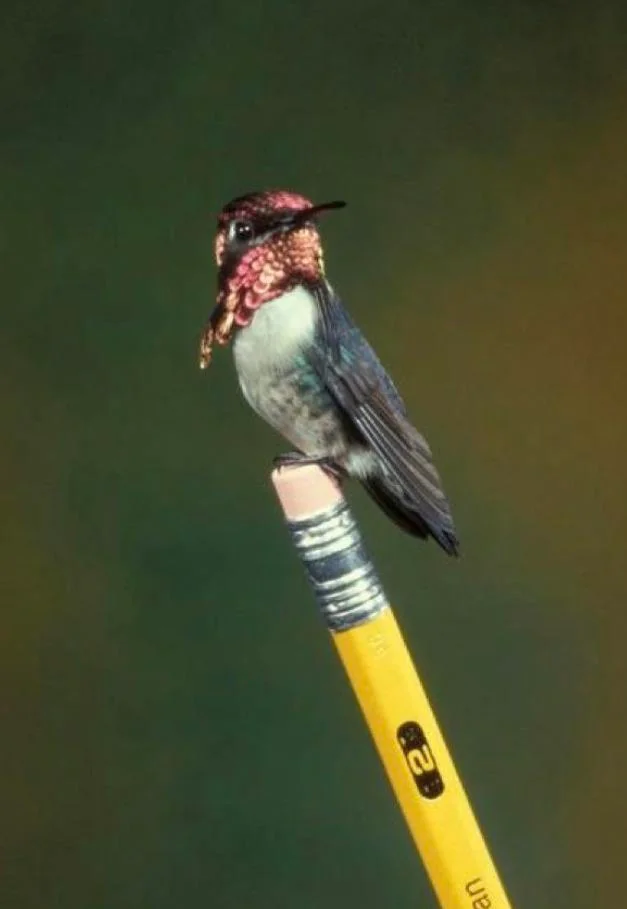
This little thing here is the Bee Hummingbird. Measuring just 5.5 - 6.1 cm long and weighing less than a dime, they make for the smallest birds in the world.
Bee Hummingbirds are native and endemic to Cuba, distributed across the entirety of the archipelago. They are often found in areas with thick plant growth, and are known to feed off of and pollinate nine plant species; nine of which are native to Cuba.
In kind to all hummingbird species, the Bee Hummingbird is a swift and powerful flyer- beating its wings 80-200 times per second. Unsurprisingly, this is faster than most other hummingbird species.
Reaching sexual maturity at one year of age, male Bee Hummingbirds court females through sound which is made through the tail feathers.
Bee Hummingbirds are known to live from seven to ten years, in contrast to the average hummingbird lifespan which is five years.
Here is a diagram comparing an adult male Bee Hummingbird to a human hand.
Great Eared Nightjar (Dragon Bird) 8/28/24
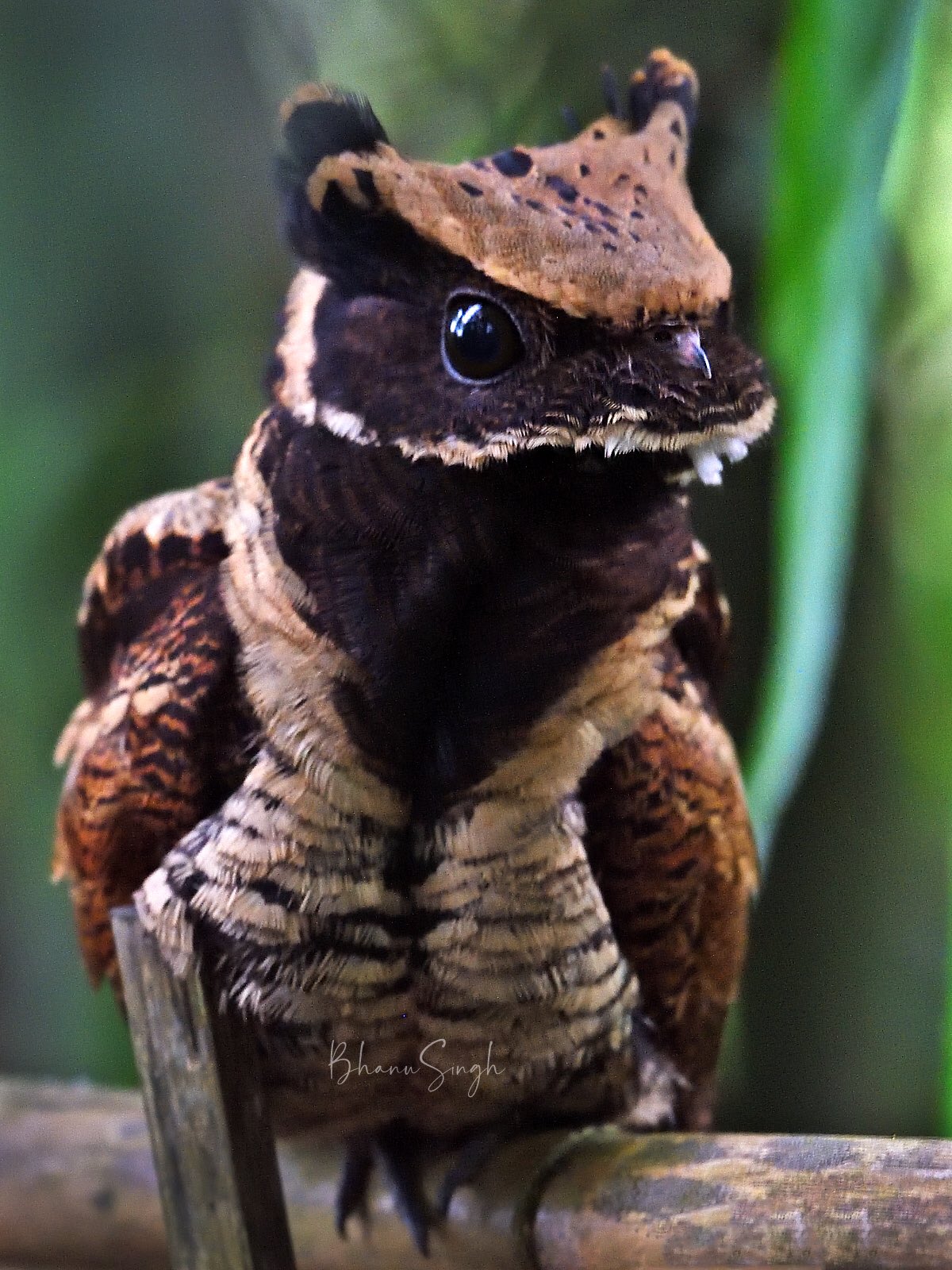
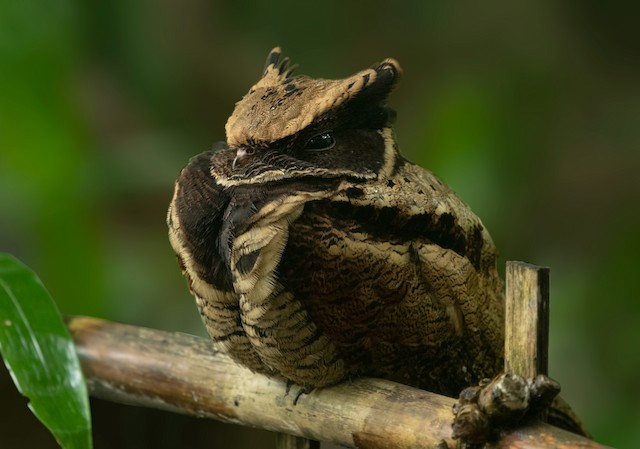
The bird of today, the Great Eared Nightjar. This, of course, is a species of Nightjar, genrally found in parts of Southwest India and Southeast Asia. They generally live in the subtropics, or lowland tropical forests. They are recognizable by their large eyes, owl-like appearance, and the very prominent ear tufts on their heads. Due to the odd shape of their heads and their 'feathered horns', they are often compared to baby dragons. Thus, earning their fitting nickname 'Dragon Birds'.
The Great Eared Nightjar is also considered the largest in the species, and the second heaviest following the Nacunda Nighthawk.
Like other Nightjar species, the Great Eared Nightjar is nocturnal, mostly active at dusk and at night. During these hours, they spend their time hunting various insects -like moths and beetles- that are typically caught in flight.
This is a short video of a Great Eared Nightjar's call.
American Woodcock 8/27/24
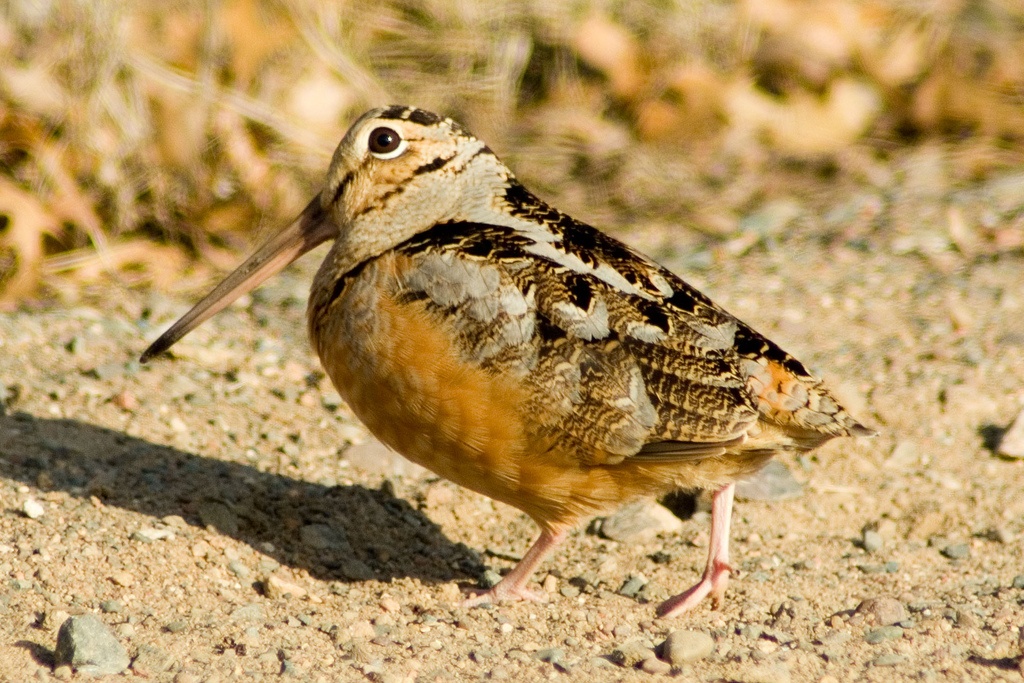
Today, featuring the American Woodcock. This is a small, round shorebird commonly found in the eastern half of Northern America. Their brown, grey and black plumage allows for excellent camouflage within the brushy forested habitats they generally reside in. They are also fittingly named Timberdoodles, Mudbats, Bogsuckers, Night Partridges, and Labrador Twisters.
Woodcocks have a very prominent narrow and prehensile bill, which is one of their main tools that aid them in the search for food. Their eyes, a bit reminiscent of that of a duck's, sit far back on their heads, allowing them to watch the sky for danger while probing generally moistened soil with their bills to weed out earthworms. They'll also eat larvae, snails, centipedes, spiders, beetles and ants, as well as the occasional seed. Woodcocks are most active during dawn and dusk.
All this aside, Woodcocks are often recognized by the way they rock (or dance, rather), as they walk, for seemingly no good reason. Some believe this behavior helps them hunt by disturbing earthworms beneath the soil, others believe they do it to communicate a threat, much like a white-tailed deer would flair its tail.
To conclude, here is a two minute video. it brings me immense joy.
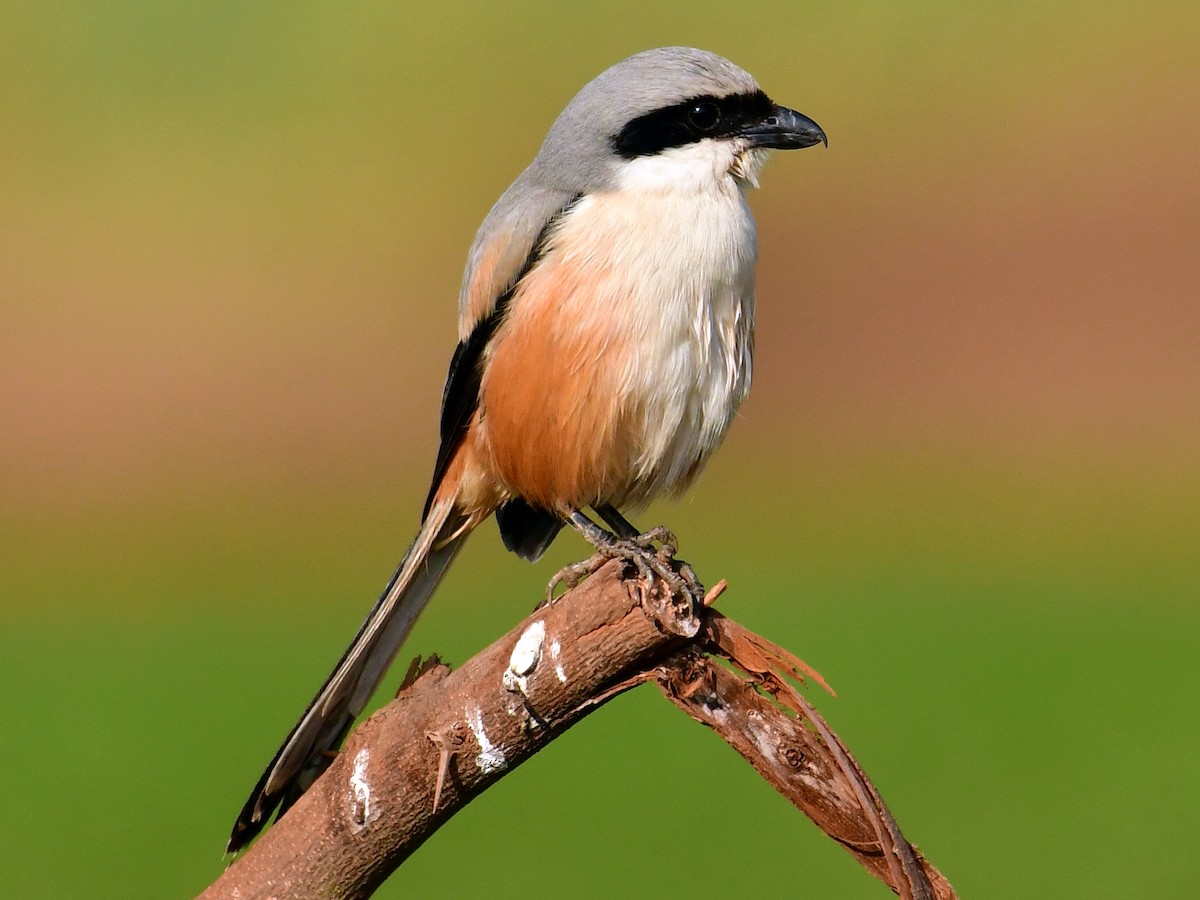
Longtailed Shrike 8/26/24
This is a Longtailed Shrike, one of a few variations of Shrikes (Also nicknamed Butcher Birds for their feeding habits). A predatory passerine, mainly found distributed across Asia. Though their plumage does vary, all subspecies have a black mask, and, of course, a long, black and slim tail.
Though these birds are small and quite pretty, what I found interesting about them is their certain feeding habits that vary from each subspecies. The Longtailed Shrike specifically, is known for impaling it's prey on sharp thorns, branches and bushes. The prey in question - lizards, insects, small birds and rodents - are generally spiked to be preserved for a later time, or to allow the bird to access meat with less difficulty. In some cases, the prey will be impaled to allow the toxins in certain insects to break down.
These birds also have capability to mimic certain calls and songs including that of squirrels, dogs, cuckoos, and lapwings.